
 A few state comparison maps have been making the rounds lately, touting a state or metro area’s concentration of “young professionals”. Beyond the maps, countless lists are published of the “best places” for this cohort.
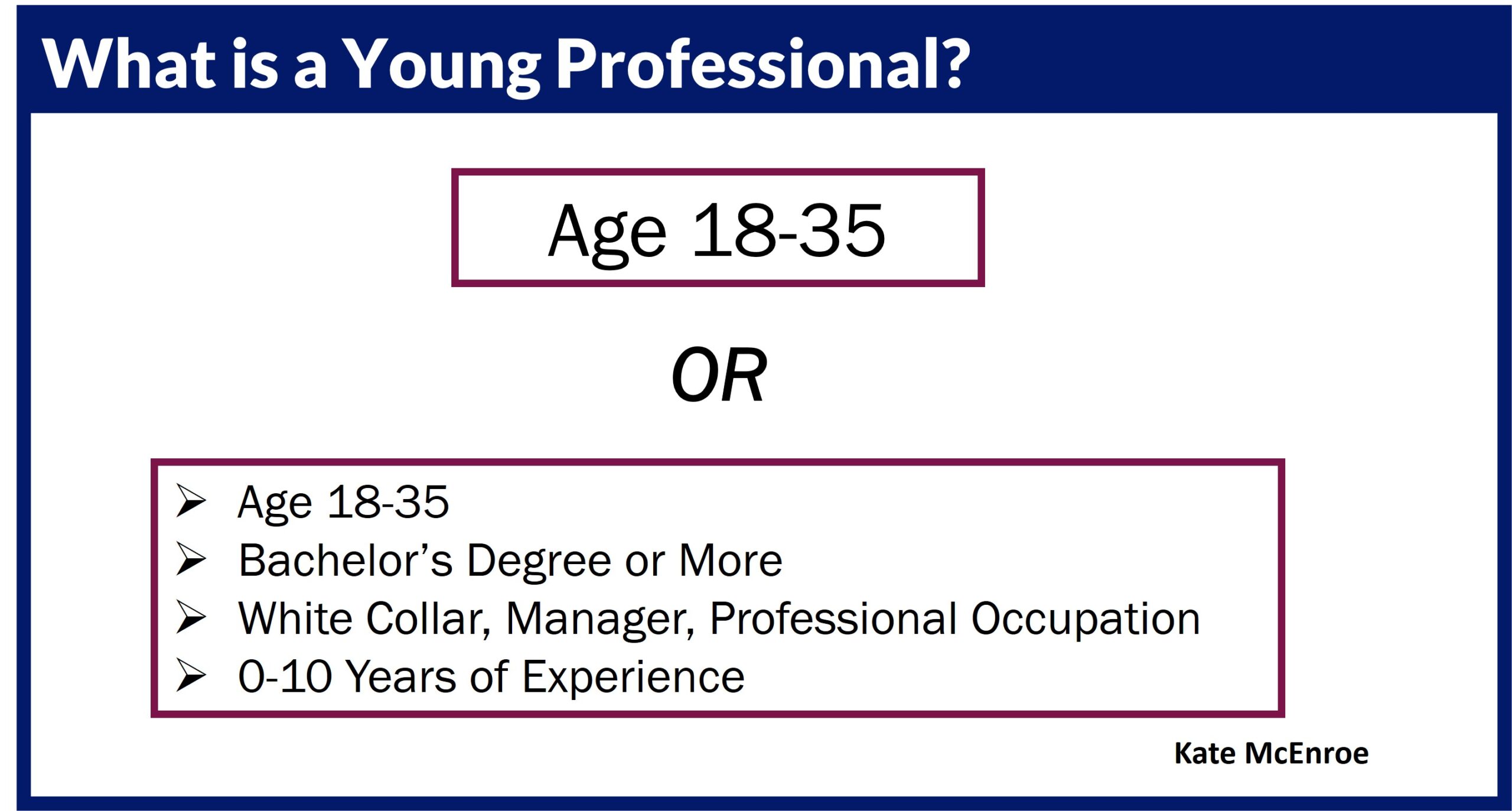
The casual understanding of the term “young professional”, reinforced by the headlines and captions that posters and publishers have added, is that the area can offer an advantage to employers looking for young, educated individuals to fill primarily white collar professional, managerial and STEM occupations for years into the future.
So what’s the problem? That’s not what the technical definition young professionals means, so that’s not what the data in these visualizations show. The data sources are reporting on the number of individuals who are 18-35 years old, and therefore fit the criteria in the sense that they are likely in the early stages of their career. It makes no assumptions about their education, occupation, or even whether they are employed.
A young and growing population is a worthwhile thing to highlight, but in this case getting granular with your words when the data doesn’t support is a little extra.